Monday, 4 January 2021

Wrapping up for the winter

Playing with locos and taking passengers up and down the line is wonderful, and as the loco passes by, it all looks so tranquil and serene. However, behind all the tranquility and serenity, there is a band of volunteers who have been coming in on a weekly basis since October, to dispose (clean out) and light up the locos, ready for their next outing.


Then, at the end of the season, we have to “winterise” the locos, as they are not going to be used for a while. This includes several elements, so it is not a 5 minute job!  Bryony and I joined one of the winterisation teams on December 29th to get our hands dirty for the last time in 2020!


Each loco had been “out”, and therefore needed the fire grate cleaning and sweeping off, the smoke box swept and emptied, the ashpan washed through and emptied, and the boiler and water tanks draining down.  We needed to drain the gauge frames, lubricators, blow the condensing coils through and disconnect the pressure gauges. As I said, no 5 minute jobs here!


Breaking these jobs down, one by one:


Fire grate cleaning

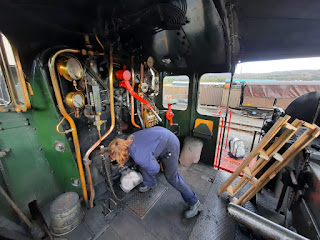
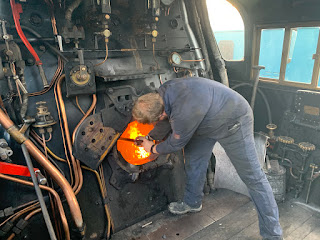
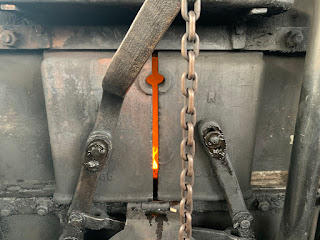
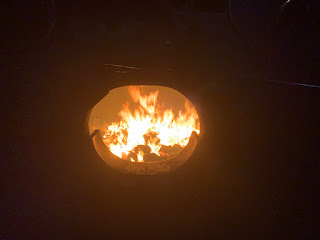
One of the muckier jobs, and not for the claustrophobic, involves someone climbing into the firebox, lifting out 3 or 4 fire bars and then scraping all the ash down into the ashpan.  Once all the big lumps have gone, the grate then gets swept with a hand brush, all the way round, including the brick arch, the walls and crown sheet (ceiling of the firebox).  Once this has been done, the “lucky volunteer” can then exit the firebox for a well earned breather and back stretch!
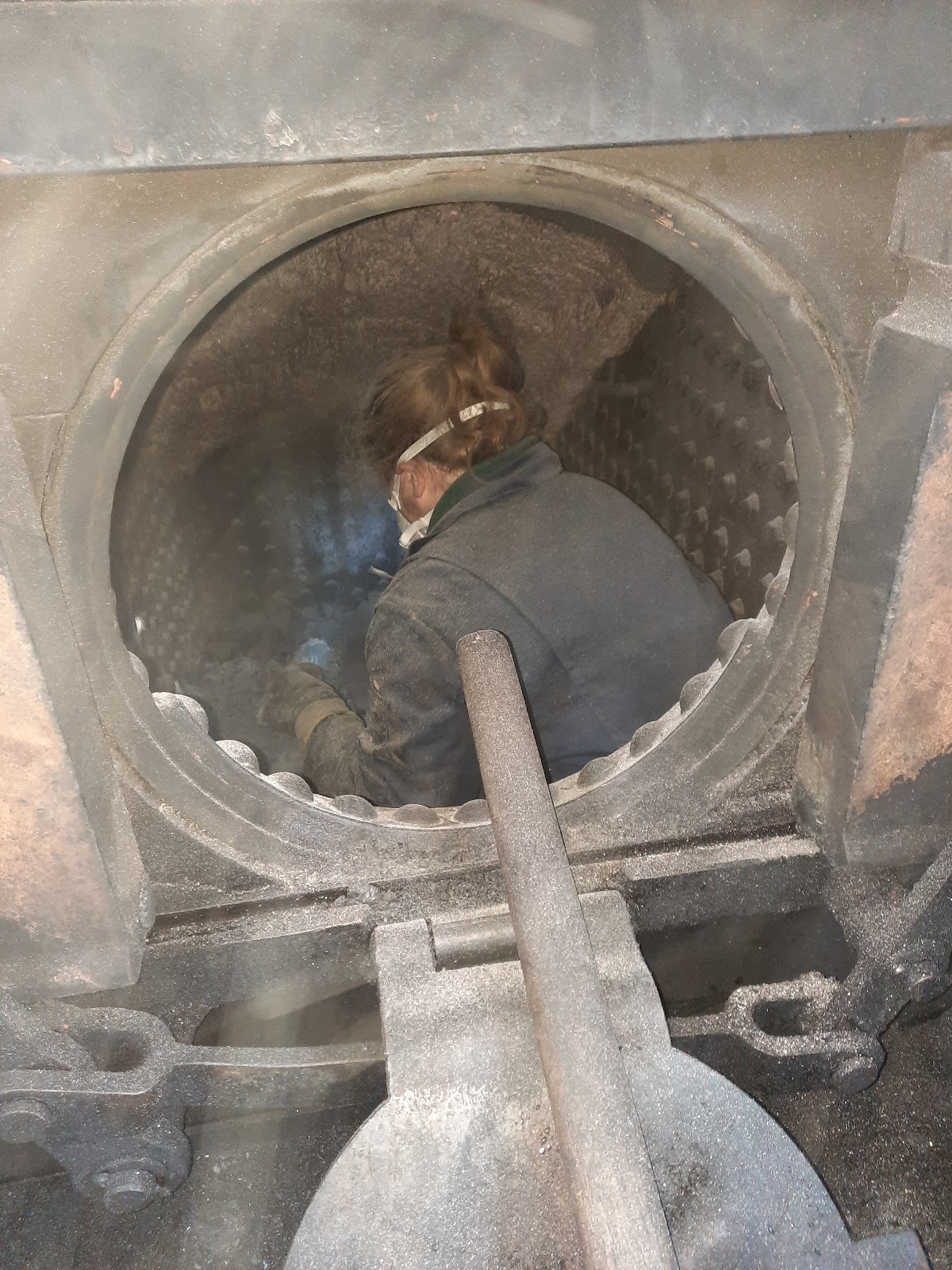
Bryony sweeping out the grate of 4270 - head torch recommended


Smokebox emptying

Open up the smoke box door, and hopefully you are greeted with a nice pile of ash, right by the door, which makes it nice and easy to clean out.  However, as we don't live in a perfect world, the ash has normally spread right up to the tube plate at the far end, meaning that you either use a very long broom, or, in my case, climb into the smokebox to reach and sweep it all with the hand brush.  Once the ash has been removed, the tube plate needs to be brushed down to remove as much dust as possible.  A hoover would make this job a lot easier!
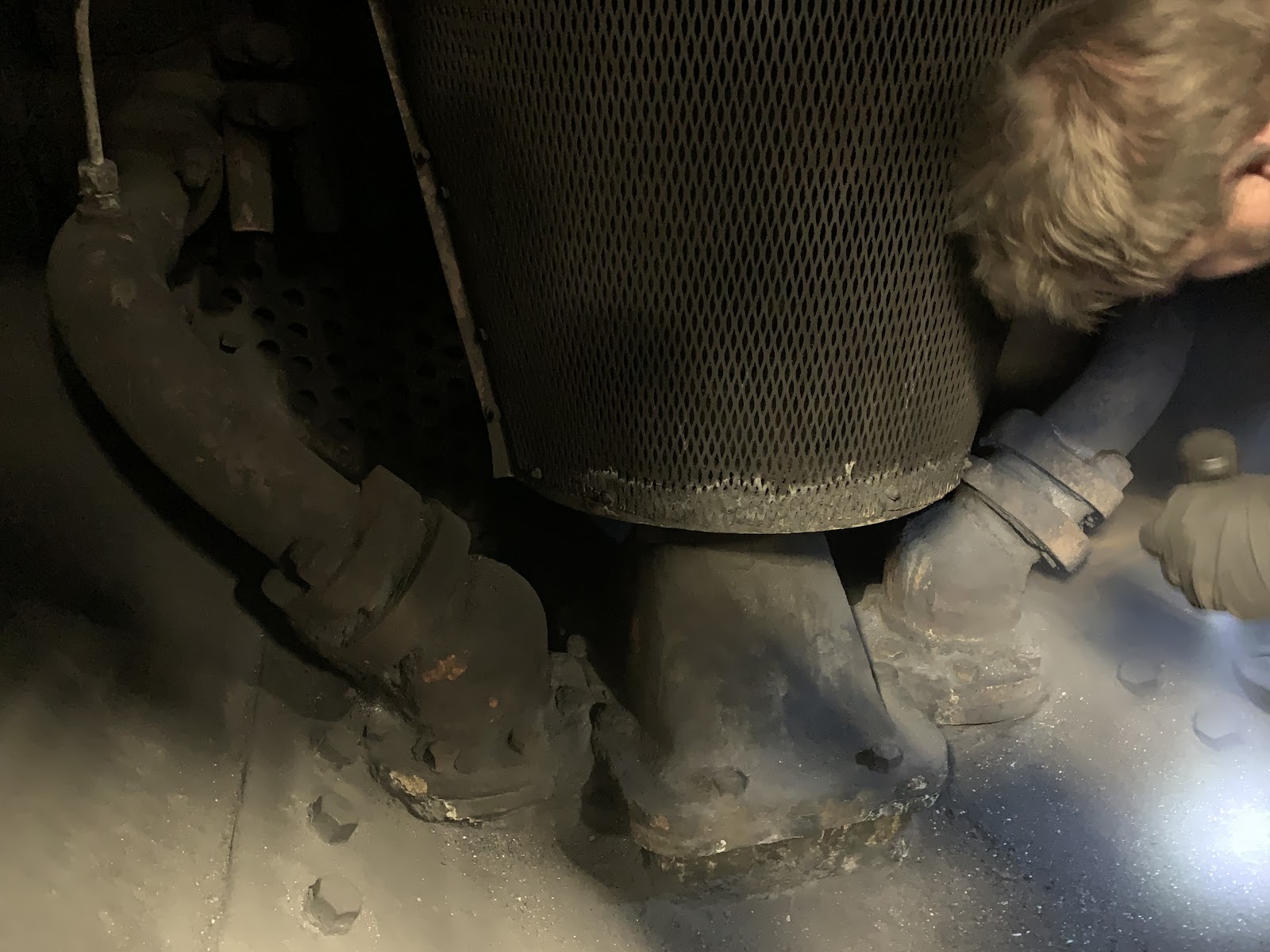
Tom Cleaning out the Smokebox of 4270


Ashpan emptying

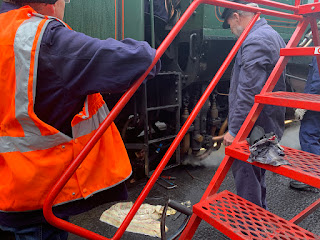
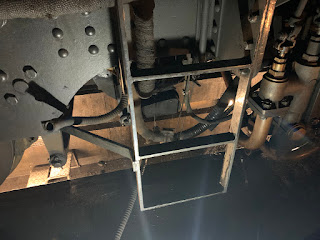
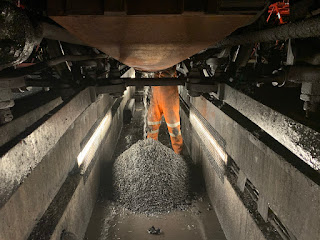
This job forms part of the Fireman’s list of jobs to do in the morning if the loco were going “out”. All our locos are slightly different, but they all involve going underneath with a hose pipe and washing out the ashpan, making sure there is no ash left inside them. Funnily enough, most Firemen are normally only too happy to delegate this job to their Cleaner for the day, as with some locos, it can be a VERY messy and wet affair! They then get made to shovel it all out of the pit after the loco toddles off for the day, as well.


Boiler drain down

A relatively easy job; at the bottom of the boiler, under the footplate, is the blow down valve.  This has a safety bolt on it to stop it opening up when you don't want it to!  Undo the safety bolt, undo the valve, and out the water goes! Done!

Water tank emptying

This is even easier, as it is just a case of making sure no one is standing too close, as they will get wet feet, then open up the feed valves for the injectors. A sure fire way to learn whether your boots are still water-proof or if you need to invest in a new pair!


Draining the Lubricator

This involves draining the water from the bottom of the lubricator, but more importantly, draining the water from the glasses.  This is to stop them freezing and cracking the glasses.  One glass decided it was time to retire and cracked whilst loosening the nut, so we had a quick crash reminder course on switching glasses and seals, courtesy of a very patient Jamie.
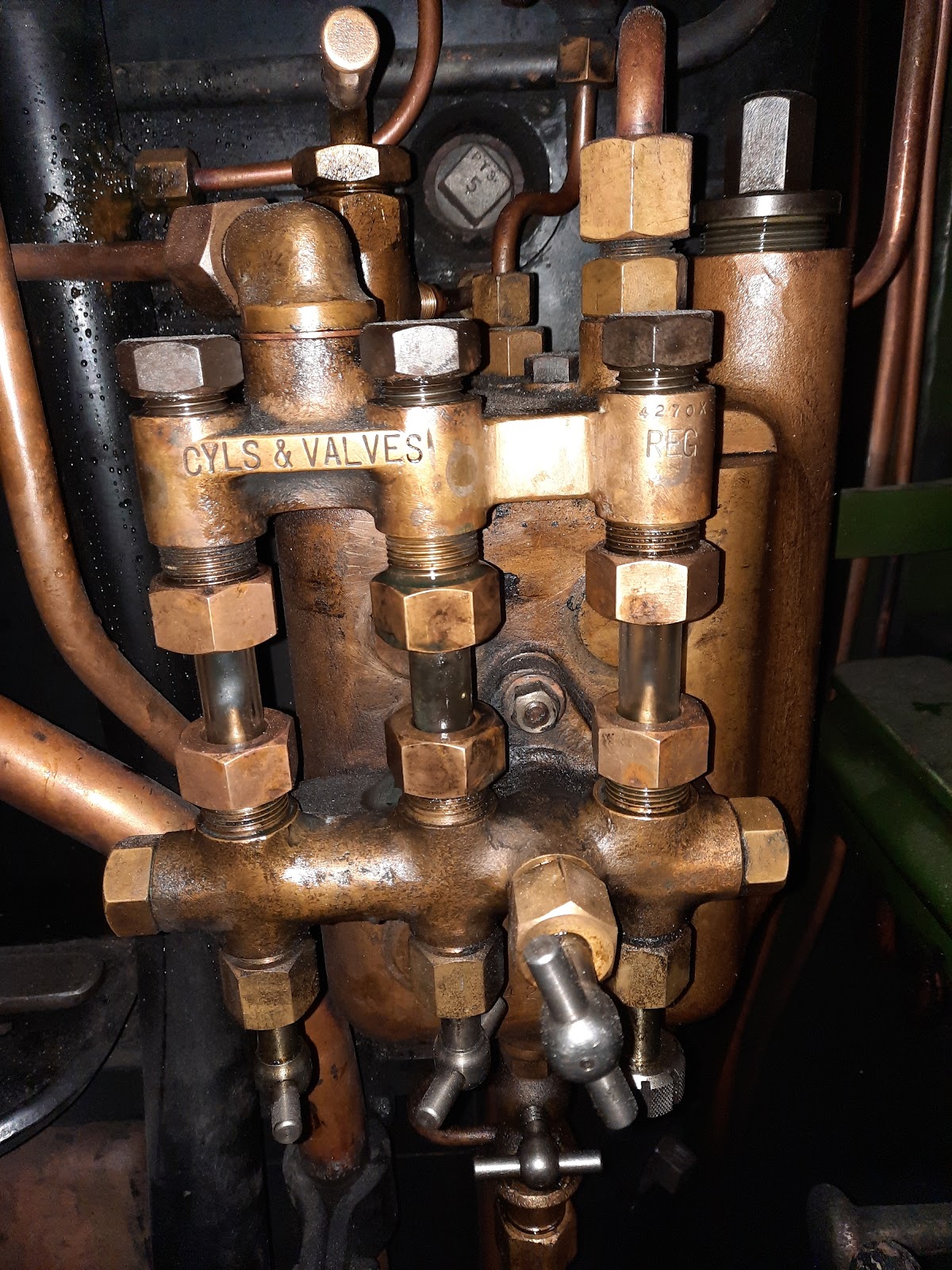
Fully drained Lubricator glasses on 4270


Condenser Coil draining down

Another easy job (so long as you’re taller than 5’5); undo both pipes, get an airline and blow it through the coil.  Best to make sure you are not standing underneath it though, as you will get an impromptu shower, which in December is not very welcome!

Pipes split and drained on 4270’s Condenser Coil


Pressure Gauge drain down

Although technically no water should get to the Boiler Pressure gauge and the Steam Heat gauge, it is good practice to take the pipe off the bottom of these gauges, so that any water that may have accumulated is released. Water has a habit of hiding in nooks and crannies, and our owning groups may have something to say if something decided to run afoot over the next few months!
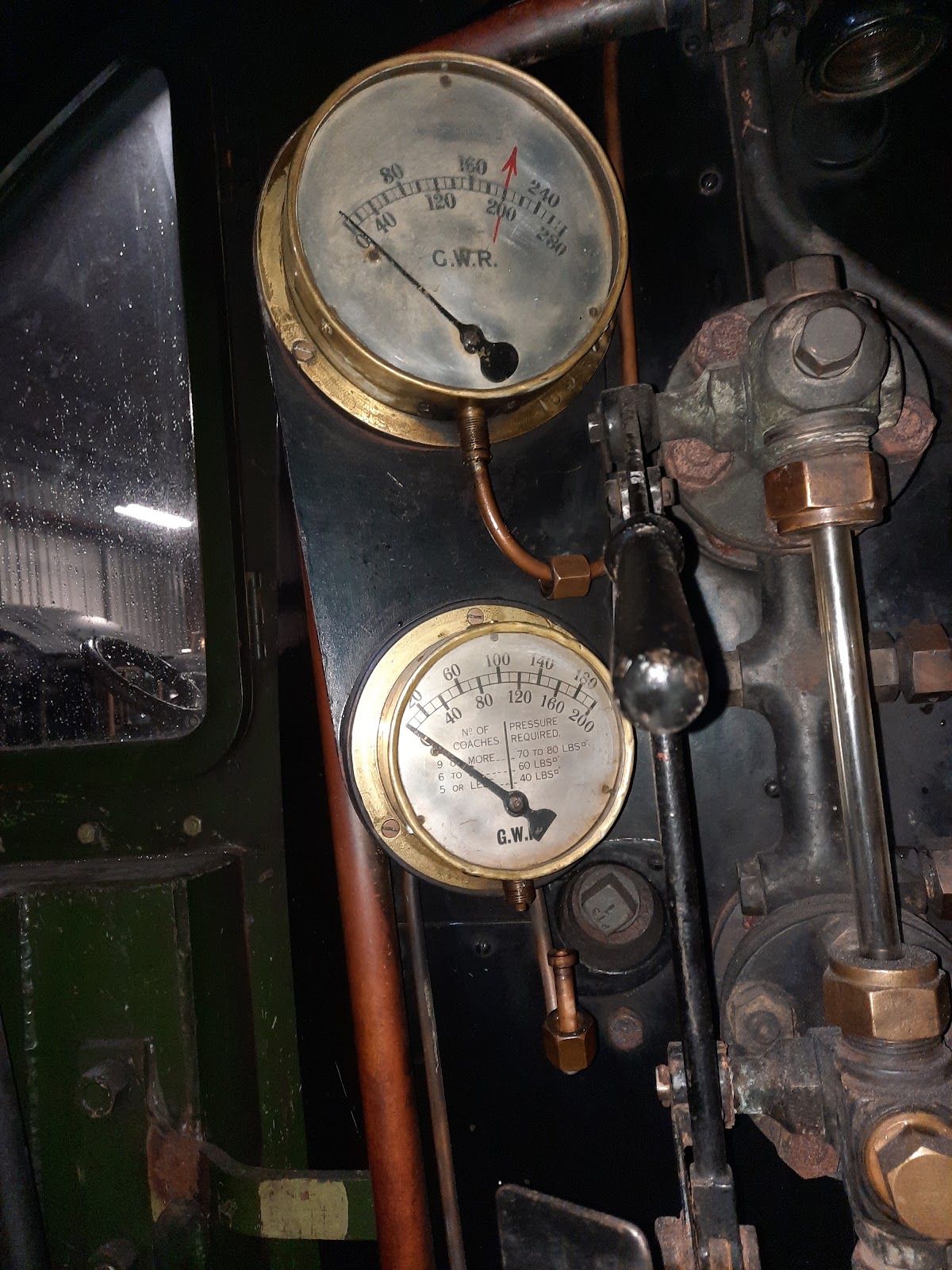
Pressure Gauges on 4270 with pipes released


Gauge Frame drain down

Another easy job!  Ensuring that the frame has been isolated from the boiler, take the Gauge Frame cover off (easier said than done for some people!), then slacken the top and bottom nuts off, and the glass should then move enough to ensure there is no trapped pressure.
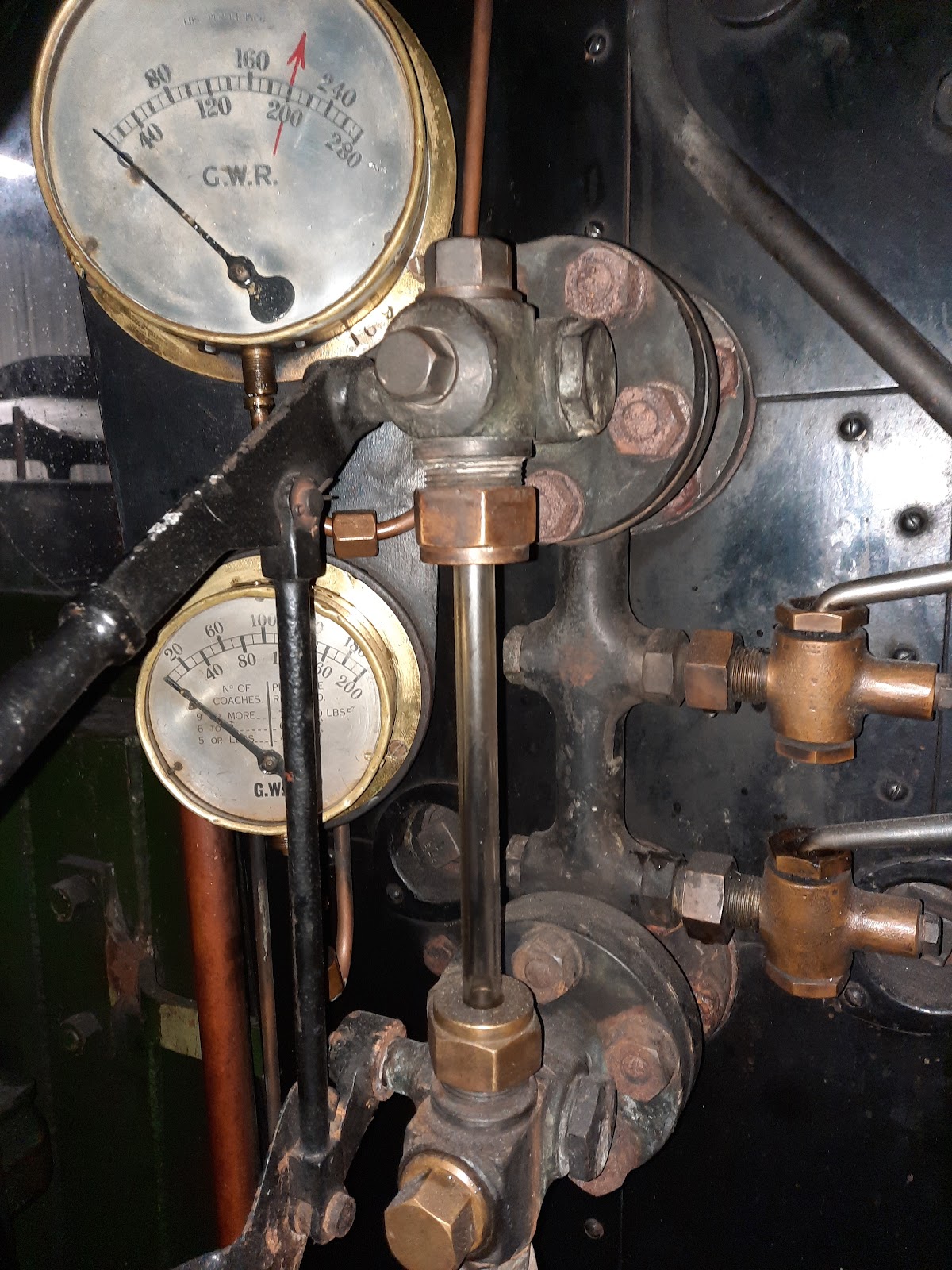
Gauge Frame on 4270, cover removed and nuts slackened


Masons Valve repair

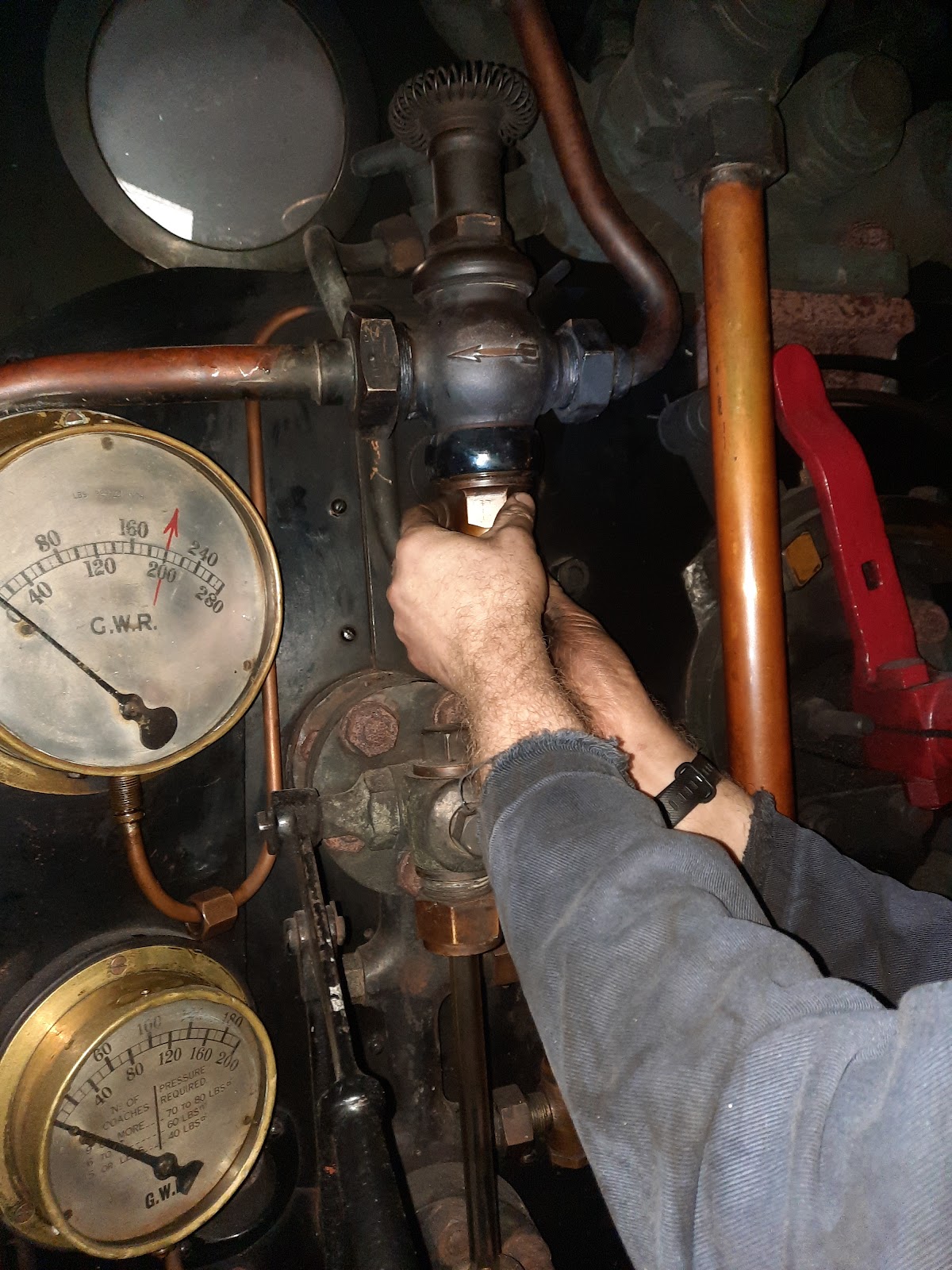
One of our firemen had booked a problem with a steam leak from the Masons Valve, so while we were on the footplate, we thought we would take the opportunity to try and rectify the fault.

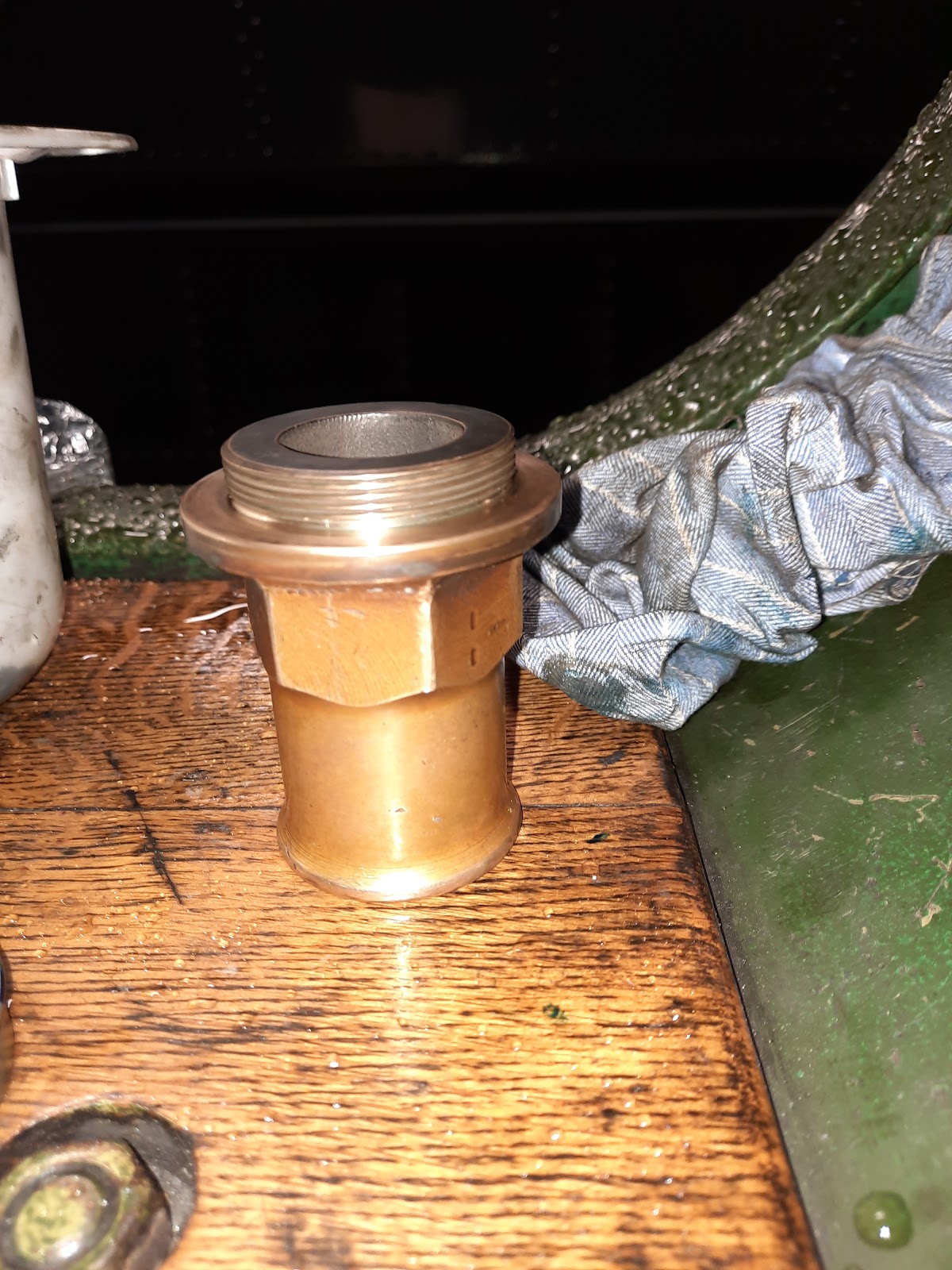
It turns out that the Masons Valve on 4270 is in fact just for show (sshhh, don't tell anyone), and doesn't actually have any working parts inside it. We took the bottom of the Masons Valve and found that there was a small hole in the blanking plate, which was letting steam past, under pressure.  The decision was taken to put the bottom casting of the valve on to the diamond miller, and flatten back the surface to get a much better seal.  Jamie then put it all back together, using some “Steam tight” on the threads, and back on the loco.  This will be monitored the next time the loco is in steam, to see if the leak is still present.

The bottom casting off the Masons Valve, taken off and milled, then refitted by Jamie


Fusible Plug repair

4270 had also been “red carded” on Christmas Eve, which meant that it was no longer fit for service, due to having a very small steam leak in the crown sheet of the firebox.  This only manifested itself when the boiler was under pressure, so anyone lighting the loco up would not be able to see it.

Jamie took the plug out, after marking where the leak was coming from, so it can be repaired and reinstalled.

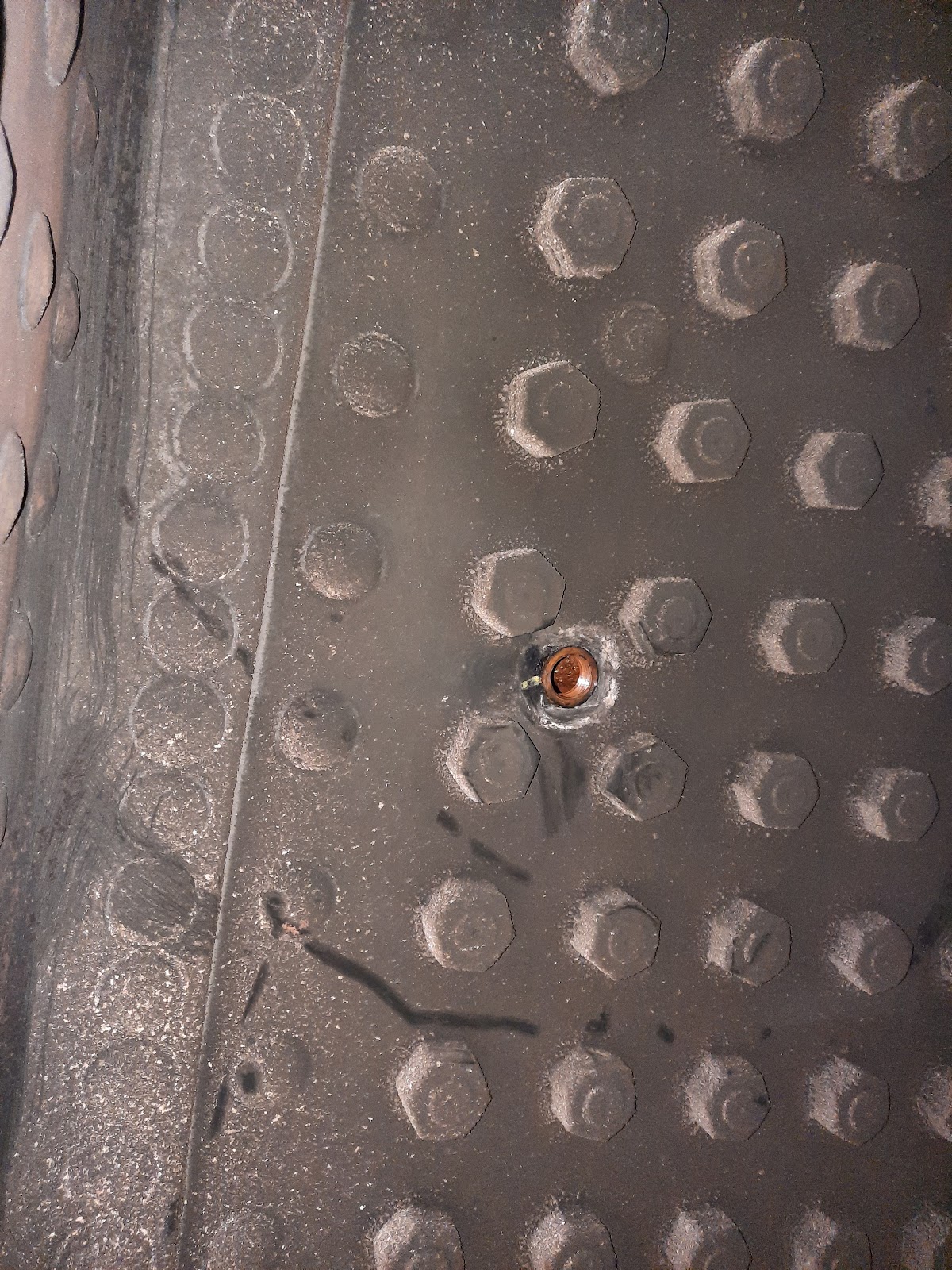
Fusible plug (left) and the hole in the Crown Sheet where the plug has come out from.  The yellow mark denotes where it was leaking. Note the telltale marks in the dust in the area around the leak


With the current situation, only essential maintenance is currently allowed at Toddington, so who knows when we can report on more work being undertaken!


Any questions, feel free to ask them in the comments, and we will do our best to answer them


Thanks for reading

TTFN

Tom


Monday, 14 December 2020

Santa gets to go to town

The sound of 4270’s whistle was crisp and clear in the December morning on 5th December as the GWSR successfully kicked off its Santa Specials for 2020. This year running from Toddington rather than Cheltenham, the first round of families headed down the line to the ‘North Pole’ to see the big man in red.

Setting off for the first train

Understandably, this year Santas have to run a little differently. Gloucestershire is in Tier 2, which luckily means we are still able to run and minimal changes to plans had to be made. Some of our fellow heritage railways have not been so lucky this year as Covid continues to hit them hard, but the GWSR is determined to make the most of the situation.

Resplendent in the winter sun

The good news is the feedback we are getting from the general public (and featured on the BBC’s Midlands Today) has been amazingly positive, and credit must go to the Santa team for their planning and preparation in a year where question marks over running at all hung over most of the usual prep time. As the title says, Santa did indeed get to go to town this year!

Ignoring the fact that the weather is slightly more inclement (aka colder) than it was when we temporarily shut up shop in November, things at Toddington have returned to their new normal. Working parties are back in the shed, though slightly more layered up than they were, and the usual mix of winter maintenance, restorations and overhauls has picked up where it left off and is continuing at speed.

Up, up and away?

2807 has been lifted off her wheels, which spent some time living in the carpark awaiting departure to the SDR, and the team have been fitting the remaining horn ties whilst also removing the transfer beam from the front of the engine. CSPL has recently set up a new Facebook group which is being kept up to date with all the progress of the overhaul, so do check it out as there’s some interesting stuff on there straight from the hard-working group themselves.

7903 back from the North Pole
35006 has had its main driving springs replaced, however as it is not due to be used until the Mince Pie specials after Christmas the owning group still have a few weeks to finish the last little bits and pieces before she is needed in steam. The Santas are running an average of 10 miles per day, which was deemed a little short for the big Merchant Navy! Apparently, immense care and attention has been paid when replacing split pins underneath the engine, so drivers shall no longer live in fear of a stray split pin arm whilst performing their morning checks!

Whispers are beginning to float around about how the 2021 season will run, however as with everything planning wise this year nothing is concrete. The Santas are completely sold out, however if you would like to visit us the ‘Mince Pie Specials’ will be running from 27 December - 3 January, our last day before heading into winter maintenance.

Wishing you a very Merry Christmas and a Happy New Year. We hope you have enjoyed reading the Steam blog this year. It has been a difficult year for blog content, but hopefully next year will be better, fingers crossed!

Bryony, Luke & Tom.


Sunday, 8 November 2020

Fire in the hole

Usually come October, the GWSR is completing its final few running days of the main season before temporarily shutting down to prepare for Christmas. Initially the plan had been to navigate through a November running season, but the new lockdown scuppered those plans. However, the GWSR is continuing to plan for its Santa season come December, when hopefully it will be full steam ahead once again. Steam, of course, needs fire and as luck would have it (thanks roster clerk) all three of ‘team blog’ were scheduled for stints at Toddington a few weekends ago to provide this very necessity. 

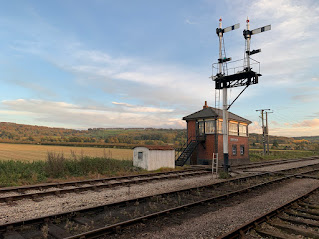
The autumn sunset reflecting on Toddington signalbox 
For me personally, this was my introduction to the noble art of warming fires, with Tom and Luke as my mentors for the respective shifts. Any long-term readers, or members of the steam department who lurk in the background, this will likely be familiar territory to you, but for me it was day one (and two) of taking the next steps in becoming a fireman.
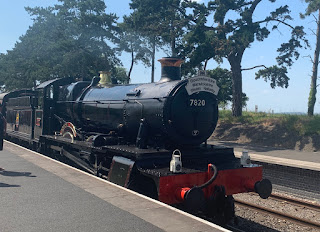
Building the fire in 7820
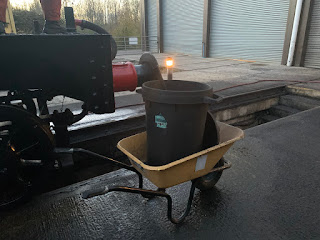
It turns out that building a warming fire is significantly easier when the tools you’re using aren’t sabotaged, namely the dustbin used to clean ash out of the smokebox which, it turns out, had a hole in the base. Inattention when removing it from the pits leaves you cleaning up a dust trail as long as it took you to notice and deposit it in the closest wheelbarrow (potentially decorating yourself as well as the floor, depending on how you prefer to carry these things). For anyone watching, it is quite a source of hilarity!

Dustbin safely deposited
One of the fun bits of learning is watching how everyone does things slightly differently and then building up your own technique. Tom had been particularly looking forward to the Friday evening turn as he was getting a chance to fire what he calls the ‘correct way round’. As someone who fires left handed, standing on the right hand side of the footplate makes his life significantly easier, even with a grate the size of 35006. My time on the shovel so far is minimal and I do not yet have a preferred side to stand on, although my GWR background very much believes the ‘correct way’ to stand is on the left hand side.
Tom building up the fire
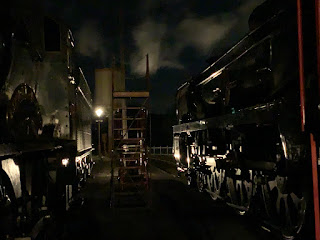
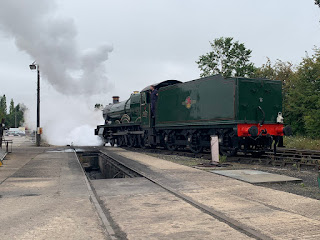
After the initial build, it’s a waiting game to see whether your fire actually takes hold or if it’s going to fizzle out and you need to enact plan B. Thankfully, our ‘passing time’ tea breaks proved successful and we had something coming out of the chimneys when we returned. A few more rags, bits of wood and more than a couple shovelfuls of coal and both 35006 and 7820 were warming themselves up in the chilly, late October evening.

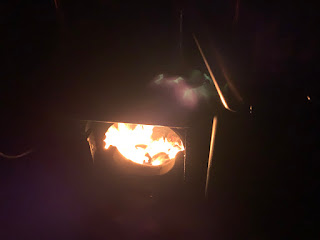
There’s a fire in there somewhere

Good signs!
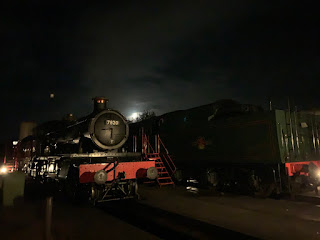
Due to the proximity of finish and start times between some of my shifts, I’m becoming very familiar with the accommodation pods at Toddington. My Saturday was supposed to be spent riding the cushions from the comfort of the brake coach on Train 2, and keeping a watchful eye on the coupling process. As it happened, that didn’t quite go to plan, but staying overnight meant we were able to pop back to the engines late on Friday evening and double check things were progressing as they should. As it was a bright and still evening, this also meant the light was pretty good for some aesthetically pleasing photos; we wouldn’t be very good bloggers if we passed this up!
Someone with more photoshop proficiency than I could edit those steps out… 

The moon rises over 35006

We neglected to bring marshmallows due to covid restrictions
Despite being rostered for my other department on the Saturday, I popped into the yard to see how the fires had lasted and was mightily pleased by the fact they had apparently turned out very well (I should take this moment to point out the excellence of my tutelage). Despite the weather, we were all in good spirits and looking forward to a day (for me, a half day) pootling up and down the Cotswolds.

My turn to be the overseer
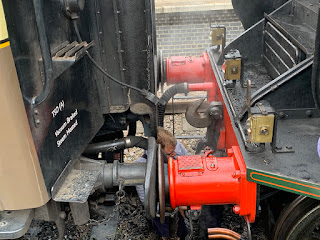
And then something went bang. That something turned out to be the steam heat bag, which decided to knock out a (thankfully unimportant) secondary pipe to the tender in the process. Not much is quite as stressful for a Guard as hearing your train may randomly come to a halt on the way to or from Broadway, but we made it back to Toddington and repairs were applied in time for 35006 to run on the 3pm service with minimal delay.

Mark (in the shadows) wrestles with the pipes
The initial fix lasted through the day, at which point a motley crew (of three) again descended to apply the longer term fix. Let’s just say, I have now been indoctrinated into the “working on steam engines till late at night out in the pouring rain” club! Everything’s a learning experience after all.

Not the easiest of spaces to access
After the excitement of Saturday, I was anticipating Monday’s second warming fire turn, this time with Luke, to be quite chilled and a chance to put what I’d learnt on Friday into practice. What we had forgotten was that the clocks went back on Sunday morning, so the majority of what we were doing was in fading light and pure darkness. Trying to see into a firebox when your body is blocking the only source of light and you don’t have a head torch is not the easiest of activities.

Fire number 2
Luke reported on Tuesday that the fires had again been fairly successful so something must be going right. Again, I place it down to the fact I have good tutors guiding me through (they aren’t paying me to say this, honest).

A headless Luke ashes out 7820
And finally, some good news! Despite Covid’s best attempts at derailing practical training and assessments, the GWSR has a new Driver.

Dan qualified back in early October, becoming the youngest driver in the department and holds the mantle as the youngest ever driver on the GWSR. I think the smile on his face says it all. Congrats Dan!

Wednesday, 30 September 2020

Dust off the alarm clock

A few weeks ago, I had the pleasure of being rostered to do Friday warming fires and then a rostered cleaner shift on the Saturday morning. The Roster Clerk had seen fit to give a me 0630 start on Loco 1, instead of the 0800 start on Loco 2, so for the first time in a very long time, the alarm had to be set!

Walking back to my pod from the pub on Friday night, with a belly full of dinner (I really can recommend the Pheasant Inn), it was lovely to be able to smell the burning coal from the warming fires drifting over the car park.

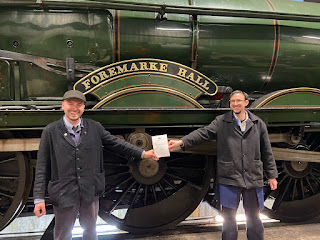
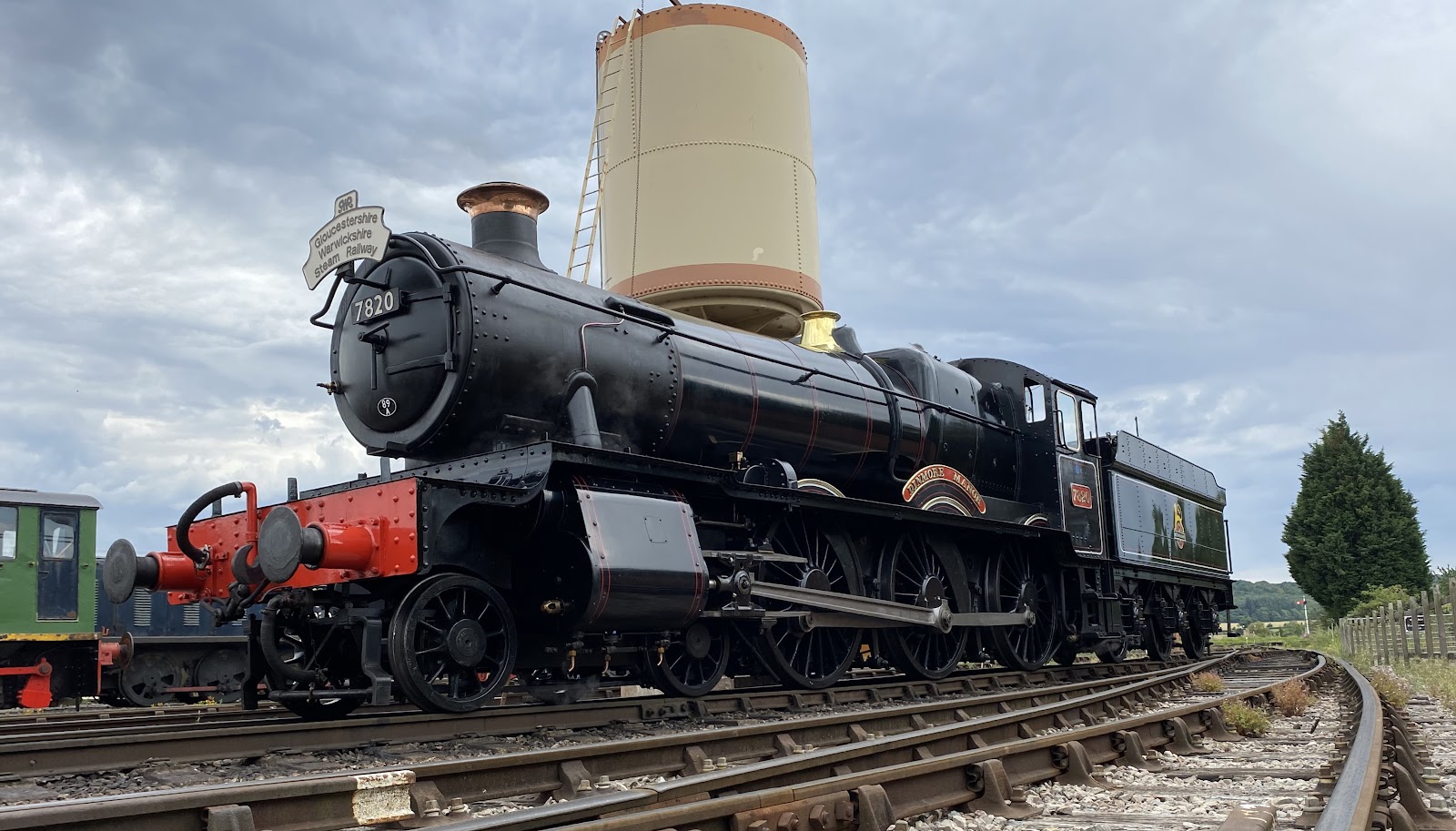
Two locos were out over that weekend, 7820, Dinmore Manor and 7903, Foremarke Hall. Both were looking resplendent in the early morning sun.
The view makes the early morning worth it
One of the jobs that the driver has to do is oiling the inside motion. At this point on some of our smaller locos, this is where the driver has to become a contortionist to get into the motion. However, on larger locos like 7820 and 7903 there is considerably more room.
Driver Evason showing how spacious the larger locos are!
With the new Risk assessments now in place, volunteering in the Steam Loco department has had to become much more of a planned event than a spur of the moment decision. Currently, volunteers have to say which days they would like to come in advance, so that their names can be entered on to a work party register. Each Loco group has a separate day in the week, where they are allowed 6 volunteers to work on their loco. There are also “yard” days too, where there is a working party working in and around the yard, instead of a specific loco.
New ‘more fitting’ security lights decorating the operations office (Peter Gutteridge)
 As the locos left the shed and took their excited passengers along the line, I (Tom W) unintentionally made life difficult for the department and teamed up with the other Tom W to start cleaning all the carbon deposits off the valve heads off 4270 in preparation of being sent to Tyesley loco works to have new liners fitted. You can imagine how interesting it was getting either of our attentions. 4270 is hoped to be fit for traffic in the next few weeks, so her fans will get to see her in action this Autumn.
Tom W (the other one) cleans off carbon deposits off 4270’s valve heads
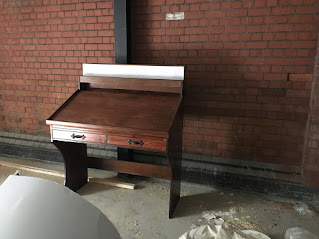
One of our good friends, Eddie, from Carriage & Wagon has made the Loco department a wonderful timber signing on desk, to go in “The Goods Shed” welfare building. I think you will agree, Eddie has done a superb job on the desk, which will be used for many years to come! Speaking of the new mess building, at the moment “The Goods Shed” is still not yet in use as final finishing touches, such as the external access stairs, are yet to be completed. Few people have had a chance to have a sneaky/cheeky (you decide) look round, and reports from them are that it looks brilliant. Fingers crossed we’ll have a full report to provide you with soon.
The new Signing On desk, built by Eddie in Carriage & Wagon
Whilst the return to running beds in, work in the shed continues on. Despite an incident where the keys for their container ended up locked inside it, the CSPL have picked up where they left off in March with their heavy general overhaul. The boiler remains at Riley’s, however there are plenty of jobs to be getting on with in the meantime! The size limitation of working parties has changed many an owning groups schedule, particularly as social distancing (everyone’s favourite phrase) still needs to be adhered to. More pieces have been cleaned, primed, labelled and stored in the siphon to await being returned to their rightful place on the engine as and when, the vacuum and steam heat pipes are getting some much needed tlc and the crossheads have been split from the pistons. 
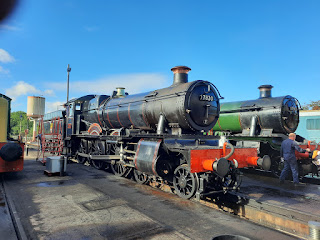
Four 2-8-0s and a Peckett (Ian Crowder)
The focus for 35006 and her working group has been continuing to fettle with her brakes. Having discovered founding sand in the linkage between the engine and tender back before lockdown, believed to be the cause of some dragging, the owning group have been making minor tweaks to see if they can continue to improve performance. As always, more fettling is usually needed once a loco starts working regularly again. 35006 has been out running during September, and will be retreating to the shed imminently once 4270 is ready, so act quickly if you'd like to see her.
Looking resplendent in the September sun
As Dinmore Manor spent a lot of time out running most days since the shakedown trains back in August, DMLL’s attention has therefore been focussed on 3850 and 2874. August saw delivery of 2874’s wheels back from being re-tyred down in South Devon, which were promptly set upon with primer and rust-resistant paint the next day. The timing meant they were out in the car park on the first day back of public running, and many passengers were seen to wander over and have a look at what was going on. The buffer beams and cylinder covers are also being removed, although not without a fight as usual. 
Sam gives a piston a sledgehammer-based “impact shock” (Roger Tipton)
3850 has been the cause of some consternation due to some angle brackets needing creating from scratch. After a lot of time spent bending bits of steel to (their will) get the right angle, the issue has seemingly been resolved and another job ticked off the list. Progress, and a happy DMLL group.
A bare looking 3850
9466 is being prepped for departure and passed its steam test last week, before being pressed into shunting duties; might as well make the most of the steam once its there!
Snapped! (Peter Gutteridge)

Moving 7903 (Peter Gutteridge)
As the weather turns colder, no doubt we'll soon be missing that nice enclosed cab. There's a queue for turns on 4270 once she's back in traffic already!

Tom and Bryony

Sunday, 16 August 2020

Welcome back!

I wrote back in March that members of the steam department were walking into the yard after winter maintenance and enjoying the sights and smells of steam being raised for the beginning of the 2020 season. Last weekend it was deja vu as the GWSR ran its shakedown trains ready for reopening to the public. 
Dinmore Manor waiting on the shed (Ian Crowder)

Early morning alarms were set, volunteers from across the railway had been offered seats as passengers to test the new safety measures and Dinmore Manor and Foremarke Hall were prepped, ready to bring railway life back to the Cotswolds. 

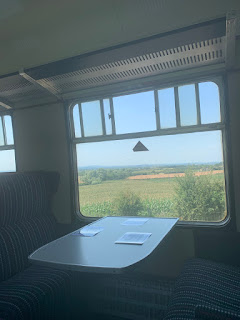
As you may have noticed, it was a trifle warm last weekend but that didn’t stop people from enjoying their railway for the first time in just under five months, one of the longest shutdown periods ever experienced by the GWSR. I took the liberty of travelling on the afternoon train on Saturday which was then followed by a cleaning turn on Sunday morning. Anyone travelling on their own is assigned a seat in the TSO (open) carriage as the compartments are minimum two people or more. 
The view from the TSO

Travelling solo in the TSO means keeping a mask on at all times, apart from when consuming refreshments. It was definitely more than warm at times but I had brought snacks and drinks with me which meant I could occasionally take my mask off and have a drink to cool down slightly. By the time we reached Gotherington, I was accustomed to the environment and didn’t feel any different to how it would have been without a mask on. 
Sat down at Cheltenham

The run rounds at Cheltenham and Broadway allow time for visitors to alight and see the engine as usual (masks are required) which of course means pictures. I noticed a fair few phones and cameras being pointed in the direction of Dinmore Manor, particularly at Cheltenham as she is currently facing north so this is the only station to get a photo “the right way round”. An opportunity to buy refreshments was also available at Cheltenham and I believe the majority of people travelling made use of it.
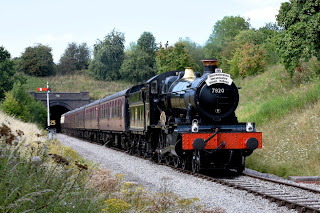
7820 bursts out of Greet Tunnel (Ian Crowder)

There was more of a breeze on the return leg and the TSO sits at the north end of the train which meant I could thoroughly enjoy sitting back and listening to 7820 power through a non-stop trip back to Toddington before collecting the staff and heading up to Broadway. I wasn’t exactly surprised to see Saturday’s working group made up of DMLL volunteers in prime viewing spots as we pulled past the shed; it must be nice to see their engine back working again.
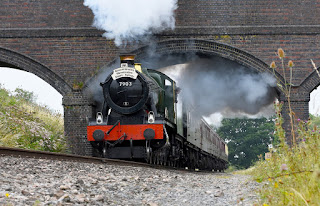
Steaming under Three Arch Bridge (Ian Crowder)

Waking up at 05:15 on Sunday hurt, I’m not going to lie. The body clock is very much out of practice and the brain didn’t want to switch off to let me get a proper night’s sleep. The fact that this was only my second cleaning turn had nothing to do with my insomnia, I’m sure.
Starting the day

Cleaning gives you a chance to get to know more of the ins and outs of the locomotives, especially if like me you’re a complete beginner who spends their working days behind a desk and not doing anything related to engineering. As it happens, the prep crews during the week had done an amazing job cleaning 7820 and 7903 already so I spent my time wiping down what little dust and ash had accumulated, as well as the standard fetching wood etc as and when the fireman needed it.
Waiting for coal
In what felt like no time at all, it was time for the engine to move round and prepare for the second of the shakedown days. I did spot a new inspector shining their boots as this was happening but failed to acquire a picture. Said inspector also apparently holds on to Christmas cards as one from 2015 was going to be sacrificed on the fire later that day, much to the disgust of the fireman who upon seeing the bundle of paperwork was heard exclaiming “you aren’t sticking that lot on my fire are you?”
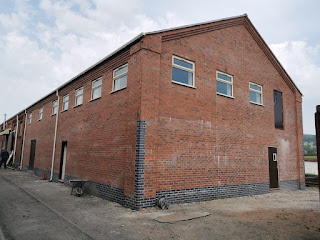
The scaffolding has come off the welfare building

It was nice to have some semblance of normality back again and over the next few weeks the GWSR will settle into its new rhythm. I probably should say that as the purpose of this weekend was to check how things would run, there may be differences if/when you come to visit us. All the information is on the GWSR website, as is the link to pre-book your tickets.
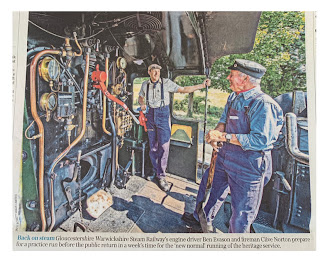
Ben and Clive in the Telegraph (Picture credit Ian Crowder, photo credit Jack Boskett)

I think the smiles above sum it up rather well.

Bryony